Choosing a Christian-based rehabilitation center is more than a step towards sobriety. It is a commitment to spiritual renewal. In these faith-based programs, recovery is rooted in biblical principles, focusing not only on breaking free from addiction but on restoring your relationship with God.
While every center may have its unique approach, most Christian rehabs share foundational rules that support healing and growth. These guidelines reshape your mindset, strengthen your faith, and help you build habits that lead to lifelong recovery.
In this article, we will walk through 8 principles that define the experience inside most Christian recovery centers. Whether you’re considering this path for yourself or supporting someone you love, understanding what to expect can bring peace of mind as you begin the journey.

(wirestock/Freepik)
1. Abstain from All Substances
Recovery from alcohol addiction requires total commitment. That means complete abstinence from drugs and alcohol. During your stay, only prescription medications approved by your treatment team will be permitted.
Early in your recovery, this may seem daunting. But know that it is the only way to overcome your addiction. And you won’t have to go it alone. At Christian treatment centers, you are surrounded by a supportive team and a compassionate community who will walk with you every step of the way. There will be regular drug tests, monitoring by staff, and plenty of peer support to protect your progress.
Don’t view this as a restriction. This guideline frees you from the toxic patterns that have held you hostage for so long. As you let go of your addiction, you will experience newfound clarity and peace.
2. Participate in Daily Devotion and Bible Study
Faith is the cornerstone of Christian rehab centers. You’ll likely be expected to take part in daily devotionals, group prayer, and Bible study. These moments become spiritual anchors that ground you and help identify God’s presence in your recovery.
You don’t have to be a lifelong believer to benefit from Christian-centered programs. Maybe you’re reconnecting with your faith. Or maybe you are exploring it for the first time. But these spiritual practices are for everyone. The goal has never been perfection. Show up, open your heart, ponder the scriptures, and the grip of your addiction will begin to soften.
3. Show Respect
Christian drug rehabs often operate as close-knit communities. As you enter the facility, you’ll meet others scarred by their addictions and personal trials. In this shared journey, mutual respect serves as the basis for overcoming your past and turning over a new leaf.
You’ll be asked to show respect to staff members, fellow residents, and yourself. That entails using kind language, honoring personal space, following the daily schedule, and avoiding gossip and conflict.
Why is this important? Because addiction does more than damage the body. Many people in recovery carry invisible burdens of shame, guilt, and despair. Respect helps rebuild what addiction has torn down: trust, dignity, and a sense of worth. When you commit to honoring others, the foundation of trust you build becomes a catalyst for lasting recovery.
4. Fully Engage in Program Activities
Skipping class may have flown in high school, but in faith-based drug rehab, it won’t. You’ll be expected to participate in all elements of your program, even the ones that may be unfamiliar. That includes therapy sessions, group discussions, chores, recreational activities, and recovery education.
This structure is intentional. Christian rehab provides all the tools you need to achieve full recovery. By leaning into the complete experience, you learn discipline, humility, and the value of showing up. These attributes will bless you in recovery and beyond as you continue on the path of Christian discipleship.
5. Be Honest in All Interactions
Honesty is non-negotiable in Christian recovery; you can’t reach full recovery without it. Even something like lying about a craving creates cracks in your foundation.
You’re encouraged to speak truthfully, especially when it’s hard. That might mean admitting to a relapse or confessing anger toward God. In these spaces, you learn how to be honest with God and give your burdens to him.
6. Take Personal Responsibility
Learning to take responsibility for your daily life is an essential part of Christian rehab. You’ll likely have assigned chores like cleaning, cooking, or tidying shared spaces. Even when you’re doing something that feels menial, like sweeping the floors, remember that these tasks aren’t busy work.
Addiction pulls you away from structure and preys on disorder. Rehab, on the other hand, gently restores order to your life. Caring for your space and others’ prepares you for responsibilities in the real world and serves as a practice in stewardship.
7. Don’t Start Up Romantic or Sexual Relationships During Treatment
Entering romantic entanglements–whether with a partner insider or outside of rehab–is almost always prohibited. In recovery, you are priority number one. The stress of a new romantic relationship can be destabilizing and distracting, especially in the early days of recovery.
Setting this boundary cements your focus on freedom from addiction. It turns your energy inward and upward towards God. When you wait to have a relationship until you are stable, you set yourself and the relationship up for success.
8. Be Willing to Surrender
To fully embrace faith-based recovery, you need to surrender yourself to God. In this context, to surrender doesn’t mean giving up. It means laying your pain and past at the feet of the Master Healer. By admitting you can’t do this alone, you open yourself up to heavenly help.
You don’t have to know everything. But be willing. Willing to trust. Willing to be changed. Willing to believe in yourself and God’s ability to heal you.
From Boundaries to Blooming
At first glance, the guidelines of Christian drug rehab may appear strict. But as you settle in, you will realize that rules actually optimize your care. Each boundary and expectation is designed to foster growth and bring you closer to the person God designed you to be.
Recovery is a mind and body experience. It doesn’t stop when you get clean. It means learning to find purpose, regain hope, and stay the course.
Everyone deserves a life free from addiction, and we promise that Christian rehabilitation centers offer the structure you need to beat your addiction.
Don’t shy away from finding the right resources; they’re likely close to home. Check out our addiction facilities in Bluffdale and St. George, Utah, as well as Rupert, Middleton, and Heyburn, Idaho, to find the best fit for you.
Video

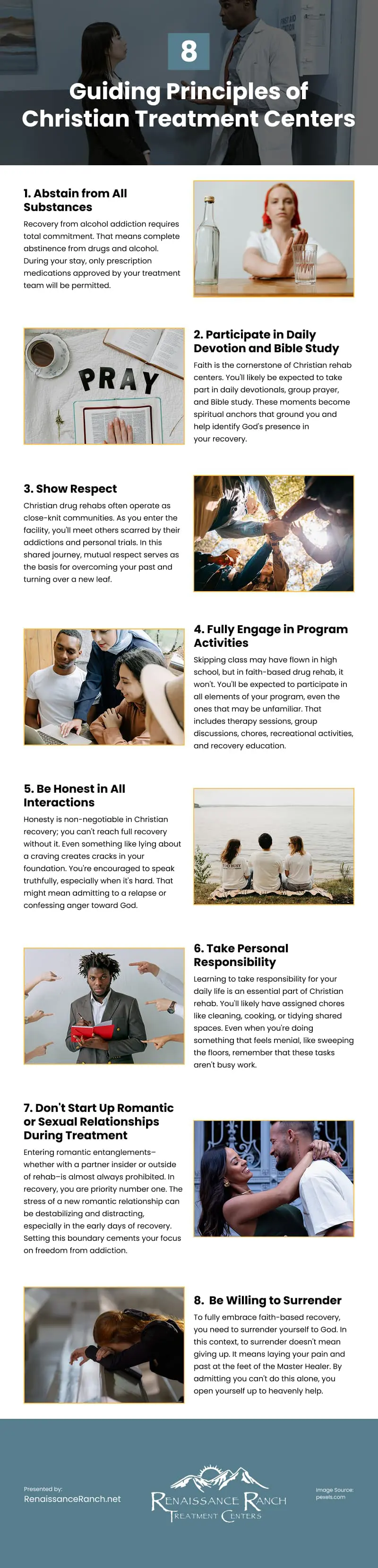
Infographic
Choosing a Christian-based rehabilitation center is about more than achieving sobriety, it’s a path to spiritual renewal and restoring your connection with God. This infographic explores the core principles that guide faith-centered treatment programs.